RADIO
RADIO






With the near future of Major League Baseball likely including an electronic strike zone, Sam Chinitz looks at the pitchers who could benefit from the change to become fantasy baseball risers, as well as the ones who could be fallers.
Among the more high-profile MLB rule changes expected to take effect over the next few years is the usage of an electronic strike zone. The electronic strike zone was used in the Atlantic League in 2019, and the MLB Umpires Association has cleared the way for its introduction to the major leagues at some point over the next five years.
To determine which pitchers will be most affected by the switch to an electronic strike zone, we must first know what kind of mistakes umpires tend to make and how often those mistakes are made. Fortunately, Boston University's Mark T. Williams and a group of graduate students answered some of those questions after analyzing four million pitches over 10 years of Major League data, providing a clearer picture of the mistakes umpires tend to make.
Featured Promo: Save 50% off the regular price with discount code CHAMP, for a limited time. Exclusive access to our Team Sync platform, DFS cheat sheets, Lineup Optimizers, betting/prop picks, and exclusive content from Nick Mariano and Eric Cross! GAIN ACCESS NOW
Pitchers Likely to Benefit From An Electronic Strike Zone
If the most strikes are missed in the top corners of the strike zone, it follows that pitchers who pitch in those areas most frequently will benefit the most from a switch to an electronic strike zone. In particular, pitchers who are caught by poor pitch-framing catchers and frequently throw in these zones are likely to see an even bigger positive effect from an electronic zone.

With that in mind, let's look at the following pitchers who all throw a relatively high percentage of their pitches in zones 1 and three from the map above and have primary catchers with poor framing skills.
Dylan Covey, CHW (3.9% of pitches in Zones 1 & 3)
James McCann (-9 frame-rate)
Not only did Covey throw a relatively high rate of his pitches in zones one and three last season, but primary catcher James McCann was one of the worst pitch-framers in the league, suggesting that Covey would see a significant bump in performance with an electronic strike zone.
McCann’s poor pitch framing likely lost Covey a significant amount of should-be called strikes in the upper corners of the zone last season as 36% of Covey’s pitches in zones one and three resulted in non-swings, so an electronic strike zone would likely help the 28-year-old get his dismal 14.6% K-rate up to something respectable.
Daniel Ponce de Leon, STL (4.3% of pitches)
Yadier Molina (1.8 FRM)
Ponce de Leon threw 4.3% of his pitches in zones one and three last season, the second-highest mark among pitchers who threw more than 500 pitches. Furthermore, Cardinals catcher Yadier Molina is a middling pitch-framer, with his 48.7% strike rate on pitches in the shadow zone ranking 31st of 64 qualified catchers.
Ponce de Leon posted a solid 25.6% K-rate last year but it came with a 12.8% walk-rate. An electronic strike zone could give bumps in both metrics and give a significant push to his ho-hum 12.8% K-BB%.
Joe Jimenez, DET (4.1% of pitches)
John Hicks (-5.3 FRM), Grayson Greiner (-2.4 FRM)
Jimenez threw 4.1% of his pitches in zones one and three last season, ranking sixth among pitchers with more than 500 pitches thrown. The Tigers were without a strong pitch-framing catcher last year but Jimenez should benefit from the signing of Austin Romine (career 2.7 FRM) this past offseason.
Jimenez already managed to post an impressive 23% K-BB% last season, so even a slight improvement from an electronic strike zone might be enough to help the 25-year-old lock down a full-time closer job, which would be a boon for his fantasy value.
Pitchers Who Will Likely Be Hurt By An Electronic Zone
An electronic strike zone is unlikely to help all pitchers. Specifically, pitchers who rely on called strikes, frequently pitch around the edges of the strike zone, and have catchers who are strong framers are likely to see their CSW rates decrease as a result of an electronic strike zone. The following are three fantasy-relevant pitchers who fit that profile.
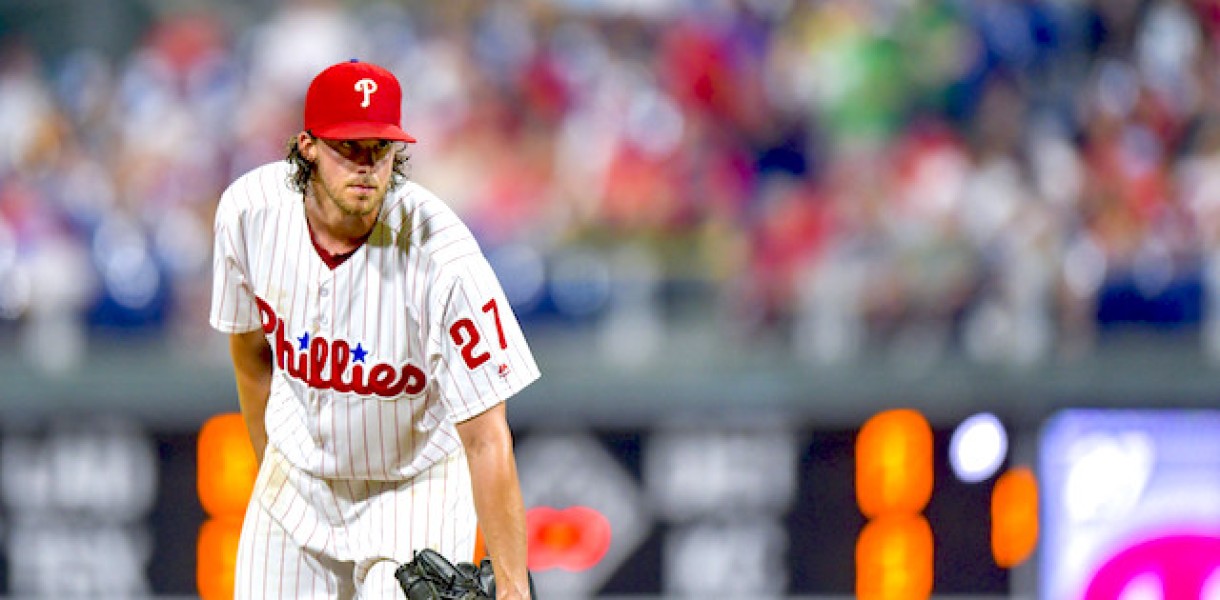
Aaron Nola, PHI (44.6% edge rate)
J.T. Realmuto (8 FRM)
Only five starting pitchers posted called-strike rates higher than Nola’s 20.5% mark last season, but Nola wasn’t living in the heart of the zone. In fact, Nola’s 44.6% edge rate ranked 15th among qualified pitchers last season. As a result, Nola likely benefited immensely from catcher J.T. Realmuto’s pitch-framing abilities.
Realmuto is a top-10 pitch framer by Statcast’s runs from extra strikes stat, suggesting that the catcher turned a significant amount of would-be balls from Nola into called strikes. Since Nola relies so heavily on called strikes and pitch-framing for his production, an electronic strike zone would likely have significant negative consequences for the 26-year-old.
Zach Davies, SD (46.8% edge rate)
Yasmani Grandal (17 FRM)
Davies’s 17.3% called-strike rate is above the 16.5% league average mark, and his reliance on called strikes is particularly pronounced because of his low 7.2% swinging-strike rate. Davies located his pitches on the edges of the strike zone at a high 46.8% rate that ranked third among qualified pitchers though, suggesting that catcher Yasmani Grandal played a significant role in Davies’s ability to generate called strikes.
Grandal ranked third in the league by runs from extra strikes last season and converted more than 50% of pitches in the shadow zone into strikes, indicating that his pitch-framing had a significant positive effect on Brewers pitchers. Since Davies’s pitching style made him especially sensitive to Grandal’s pitch-framing, an electronic strike zone would likely depress Davies’s already underwhelming 15.2% strikeout rate.
Kirby Yates, SD (46.4% edge rate)
Austin Hedges (20.7 FRM)
Yates had the highest edge rate of any full-time closer with at least 100 plate appearances last season at 46.4%, and he also benefited from arguably the best pitch-framing catcher in baseball. Catcher Austin Hedges led the league in runs from extra strikes by a whopping 7 runs - the same as the difference between the second and 11th best pitch-framers.
Hedges also led the league in strike-rate on pitches in the shadow zone with a 54.1% mark, suggesting that he helped inflate Yates’ 16.7% called-strike rate. Yates doesn’t over-rely on called `strikes thanks to his impressive 15.6% swinging-strike rate, but his tendency to pitch around the edges of the strike zone and Hedges’ strong pitch-framing combine to suggest that an electronic strike zone would have a significant negative effect on his 41.6% strikeout rate.
More Sabermetrics & Statcast for Fantasy Baseball